Low prices
for Business People !!!!


Articles
CAPITAL OF FOLCLORE
Lake Titicaca is the highest lake of the world, situated 3810 meters above sea level; it is the most important attraction of Puno. The presence of Aymaras is observed in its banks, where they occupy certain areas know as the Uros Floating islands.
The tourist centers of the province are the archaeological remains of Sillustani, Cutimbo, and Molloko. The Aymara and Quechua Cultures have survived over time with their own traditions.
The cultural mixture that happened by the Spanish presence reaches full expression with the celebration for the Virgin of La Candelaria. The city of Puno has been recognized as the "Capital of Peruvian Folclore".
CUSCO "LA GRANDEZA INCA"
Declarada Patrimonio Cultural de la Humanidad en , la ciudad del Cusco es uno de los destinos arqueológicos más destacados del mundo. Esta se identifica por ser la capital del Imperio Inca, poderosa civilización desarrollada en el año 1200 DC y considerada como la cultura más importante de Sudamérica por haber alcanzado una organización económica, política y religiosa impresionante y manifestaciones artísticas y culturales que perduran en el tiempo. El Inca, era la máxima autoridad del imperio y fue fundador del Tahuantinsuyo, una región que abarcó los países de Colombia y Ecuador por el norte; Chile, Argentina y Bolivia por el sur.
Cada año es visitada por miles de turistas, esta ciudad alberga los sitios arqueológicos más significativos del Imperio Incaico. En sus calles, aún perduran los muros incas y en los alrededores se hallan majestuosos monumentos. La fortaleza de Sacsayhuamán es uno de ellos; esta formada por inmensas piedras estratégicamente ubicadas, donde actualmente se realiza el Inti Raymi, una celebración que congrega a muchos visitantes.
En las afueras de Cusco se ubica el Valle Sagrado de los Incas, una quebrada muy apreciada por los antiguos moradores debido a sus cualidades geográficas y climáticas. Este valle integra a diversos centros arqueológicos como Pisaq, Moray y Ollantaytambo.
LA CAPITAL DEL FOLCLORE
El Lago Titicaca, el más alto del mundo situado a 3.810 m.s.n.m.es el atractivo más importante de Puno. En sus orillas la presencia aymara, se hace evidente a través de un pueblo que ha ocupado ciertas áreas de totorales, conocidas como islas flotantes de los uros.
Los centros turísticos de la provincia son los restos arqueológicos de Sillustani, Cutimbo y Molloko. Las culturas Aymara y Quechua sobreviven con tradiciones propias.
La mezcla cultural con la presencia española tiene su máxima expresión en la fiesta de la Virgen de la Candelaria. La ciudad de Puno ha sido reconocida como "Capital del Folclore Peruano".
THE TRACE OF THE MOCHICAS
In 1987, in the Huaca Rajada archaeological complex of Lambayeque, Peruvian archaeologists made a wonderful breakthrough that was subsequently disclosed worldwide: the tomb of the Lord Of Sipan, a man who died 1.700 years ago, apparently the owner of all the place richness. In his tomb, the remains of warriors, women and children sacrificed in his honor were found, as well as a gold scepter and ornaments of the same metal that covered his face. As in any other civilization, the Mochica nobility was rich and powerful, and, according to his garments, the Lord Of Sipan had a triple authority: military, religious and civil.
The Mochica vestige found by the archaeologists is currently in the Royal Tombs of Sipan Museum, where, besides appreciating the gold jewels and the metal pieces found in the mausoleum, there is an exact reproduction of the tomb of the Lord of Sipan as it was discovered. Furthermore, other traces of the Mochica and Sican cultures are exhibited in the National Museum of Archaeology and Ethnography Heirich Brüning, located in the province of Lambayeque, and in the Sican National Museum, in the province of Ferreñafe. These are undoubtedly three places that keep some of the treasures of our history.
LA HUELLA DE LOS MOCHICA
En 1987 en el complejo arqueológico denominado Huaca Rajada en Lambayeque, arqueólogos peruanos hicieron un maravilloso descubrimiento que se dio a conocer mundialmente; se trataba del recinto funerario del Señor de Sipan, un hombre que murió hace 1.700 años aparentemente, el propietario de todas las riquezas de la zona. En su tumba, se hallaron los restos de guerreros, mujeres y niños sacrificados en su honor,así como un cetro de oro y adornos del mismo metal que cubrían su rostro. Como en cualquier civilización, la nobleza mochica era rica y poderoza; y a juzgar por sus atuendos, este señor gozaba de una triple autoridad: militar, religiosa y civil.
El vestigio mochica hallado por los arqueólogos se encuentra actualmente en el moderno Museo Tumbas Reales de Sipán, donde además de apreciar las joyas de oro y piezas de metal que se encontraron en el mausoleo, existe la reproducción exacta de la tumba del Señor de Sipán, en el momento de su descubrimiento.
Asimismo, otras huellas de los Mochica y Sicán se exponen en las salas del Museo Nacional de Arqueología y Etnografía Heinrich Brüning en la provincia de Lambayeque, y en el museo Nacional de Sicán de la provincia de Ferreñafe. Tres centros que guardan algunos de los tesoros de nuestra historia.
IMPONENTE PARAISO DE NIEVES CERCA A HUARAZ
La ciudad de Huaraz, en la región Ancash, se localiza a 3.080 m.s.n.m. y es eje turístico del Callejón de Huaylas. En esta zona se ubica la Cordillera Blanca, donde se levanta el Huascarán, el nevado más alto del Perú (6.768 m).
La Cordillera Blanca, es la cadena montañosa más elevada de los Andes peruanos. Sus nevados y lagunas favorecen al turismo recreativo y de aventura.
Además del montañismo, el visitante pueden optar por deportes como el canotaje, el ala delta, la bicicleta de montaña o el esquí.
THE WONDERFUL BEACHES OF THE NORTH
The north coast of the country is extraordinary for those who love the sea. The wonderful beaches of Mancora and Punta Sal are an appropriate shelter for relaxation as they preserve their natural environment of peace and calm.
Located 182 kilometers from the city of Piura, Mancora is one of the main places to spend summer along Peruvian coastline. Its warm blue water, sunny days the year round and perfect waves for surfing make this seaside town a marvelous place. Hostels, restaurants, surfboards rentals and craftwork shops as well as access roads in good conditions meet all visitor's requirements.
Punta Sal beach is located 79 kilometers from the city of Tumbes. Fishing and underwater diving are excellent activities for its crystal clear water, with an average temperature of 24ºC (75ºC). An ideal place to enjoy fresh and exquisite seafood, lobsters and the best fish of Peruvian north region.
The beach is divided into three sectors: Punta Sal Chica, Playa Punta Azul and the seaside town of Punta Sal Grande. The first one is curve-shape with two small ends, white sand and slightly sloped shore. The second one separates the two Punta Sal beaches. The third one is larger than the others and includes an area of houses and tourist facilities.
LAS MARAVILLOSAS PLAYAS DEL NORTE
La costa norte del país es única para los amantes el mar. Las maravillosas playas de Máncora y Punta Sal, son un refugio propicio para el descanso, ya que conservan su ambiente natural, de paz y calma.
Ubicada a 182 km de la ciudad de Piura, Máncora es un de los principales centros de veraneo del litoral peruano. Su aguas tibias y azules, un Sol radiante todo el año y olas perfectas para la práctica del surf, hacen de este balneario un sitio de leyenda. Hostales, restaurantes, tiendas de alquiler de tablas y venta de artesanía, así como vías de acceso en buen estado, cubren todas las necesidades del visitante.
La playa Punta Sal, esta a 79 km de la ciudad de Tumbes. La pesca y el buceo son excelentes en sus transparentes aguas, cuya temperatura promedio es de 24ºC (75ºF). Es ideal para disfrutar de frescos y exquisitos langostinos, langostas y el mejor pescado del norte peruano.
La playa se divide en tres sectores, Punta Sal Chica, Playa Punta Azul y el balneario de Punta Sal Grande. La primera es curva con dos extremos pequeños; su orilla de arenas blancas es ligeramente inclinada. La segunda separa las dos Punta Sal. La tercera es más extensa que las anteriores y constituye la zona residencial y de concentración turística.
THE PISCO
The Pisco is produced in the old cellars of Mala, San Antonio, Santa Cruz de Flores, San Vicente de Cañete, Pacaran and Lanahuana , south of Lima. In the department of Ica, there are more than 80 pisco cellars, in Chincha, Pisco, Ica, Palpa, and Nazca.
This product is distilled also in Arequipa, in the towns of Majes, Vitor and La Joya. In Moquegua there are more than 10 cellars where visitors can taste the mistela, a mixture of pisco and wine. The 35 cellars of Tacna offer fine piscos and apricot liqueur.
The pisco is prepared in several farm estates of the central and south coast of Peru where visitors can stay and participate in its production. The grape harvest festival, in february and march, is a traditional celebration of Ica. Also, the "Pisco Sour day" is celebrated in february.
EL PISCO
El pisco se produce en las antiguas bodegas de Mala, San Antonio, Santa Cruz de Flores. San Vicente de Cañete. Pacarán y Lunahuaná, al sur de Lima. En el departamento de Ica, hay más de 80 bodegas, en Chincha, Pisco, Ica, Palpa y Nazca. Tambien en Arequipa se destila este excelente producto., en las localidades de Majes, Vítor y la Joya. En Moquegua hay más de 10 bodegas donde se puede probar., además , la mistela, mezcla el pisco y vino. Las 35 bodegas de Tacna ofrecen finos piscos y macerados de damasco.
El pisco se elabora en varias haciendas de la costa central y sur peruanas, las cuales brindan hospedaje y participación en su producción. La vendimia, en los meses de febreros y marzo, es la tradicional fiesta de la cosecha de la uva que es festejada en Ica. En febrero, además, se celebra el "Dia del Pisco Sour".
LA COMIDA CRIOLLA SE HA ENRIQUECIDO CON T�CNICAS EUROPEAS
Después de la Revolución Francesa llegaron a América, y por ende al Perú, importantes cocineros servían a la destronada nobleza de Francia. Trajeron consigo las más recientes tendencias culinarias de la cocina europea. El empleo excesivo de especias y la preparación de estofados o asados, fueron algunos de los más importantes aportes.
Las sopas también fueron preparaciones típicas de este período. Una de las más aceptadas por los limeños fue el tradicional puchero, contundente plato que consiste en aves, carnes, embutidos, col, nabo, tubérculos, verduras y arroz. En la actualidad, con algunas variaciones, es servido en mesas populares.
El chupe fue también importante. Provisto de camarones o carne, huevos, hierbas, leche, menestras y, a veces pescado frito, este plato prometía momentos inolvidables al paladar más exigente de ese entonces. Actualmente, sigue siendo un menú preferido en la comida criolla; una de sus principales variedades es el gran chupe de corvina.
Otra afamado platillo es la exquisita carapulcra, la cual tiene como principal ingrediente a la papa seca, que es condimentada con pasta de ají panca y mirasol, y se sirve acompañada de costillas de cerdo. Un lugar preferente osteneta el tacu-tacu de garbanzos o de frejol negro, que va bien si es servido con trozos de cerdo.
THE CREOLE FOOD HAS ENRICHED ITSELF WITH EUROPEAN TECHNIQUES
After the French Revolution, important cooks came to America and Peru, who had served the dethroned nobility in France. They brought the most recent culinary trends of the European cuisine. The excessive use of spices and the preparation of stews or roast were some of the most important contributions.
Soups were also typical preparations of this period. One of the most accepted by Lima citizens was the traditional puchero, a dish made of poultry, meats, sausages, cabbage, turnip, tubercles, vegetables, and rice. Presently, and with some variations it is served in the popular tables.
Chupe was also important. Cooked with shrimps or meat, eggs, herbs, milk, vegetable hotch potch and sometimes fried fish, this course offered unforgettable moments to the most demanding diners back then. Currently, it is still a preferred dish in Creole cuisine, being the great chupe de corvina one of its main versions.
Another famous dish is the exquisite carapulcra, which has a main ingredient dry potato, spiced with paste of Panca pepper or Mirasol pepper and is served with spear ribs. Chick-pea tacu-tacu has a preferential place, which is served with pork pieces.
GARDEN OF PALMS, ORCHIDS AND BEAUTIFUL WATERFALLS
Tarapoto is known for the abundance of palm trees, which can be found in its fertile lands, and for its landscape of smooth hills and suggestive waterfalls, such as Ahuashiyaku and Huacamaillo. It is also famous for the great variety of orchids existing in this area. An important portion of the 2450 species of orchids registered in Peru are found in Tarapoto.
The beauty of its landscape and flora and fauna richnessallows for adventure tourism and scientific exploration.
This dream scenario includes magnificent lagoons such as Laguna Azul and Lago Lindo, east of the city.
JARDIN DE PALMERAS, ORQUIDEAS Y BELLAS CATARATAS
Tarapoto, es conocida por la abundacia de palmeras que puede encontrarse en sus fértiles tierras, y por el paisaje de suaves colinas y sugestivas cataratas, como Ahuashiyaku y Huacamaillo. Tambien es famosa por la variedad de orquídeas allí existentes. Parte importante de las 2.450 especies de orquídeas que se registran para el Perú estan en Tarapoto.
La belleza de su paisaje y riqueza de flora y fauna propicia el turismo de aventura y de interés científico.
Este escenario de ensueño, incorpora magníficos lagos, entre los que destacan Laguna Azul y Lago Lindo, al este de la ciudad.
A PARTICULAR PHYSIONOMIE : AREQUIPA
Among all the cities and regions of Perú,
Such results can be observed in the architecture of the “Sillar”, for the original ornamentation of the fronts of the temples and old houses. In that it is possible to observe analytical elements of the way of thinking about the Indians, who collaborated in the construction. The exquisite height in the porous, white and ductile surface of the volcanic hardened lava brings us near to a world where there are figures speakers, mythological animals, flowers of “cantata”, american fruits as the “Chirimoya”, corn and the pineapple in a multicolored and beautiful artistic set.
We have half-caste music in
The popular speech of
Our popular food is also half-caste, has strong presence of Andean elements, and of that the Hispanics brought. The soups of this food, full of content are called "Chupes" and they are famous. There are consumed in these food humble products of the field and tasty prawns of our rivers and which flavor pleases the palate of those who eat lobster or caviar. The "chicha" of Arequipa (alcoholic corn drink), it’s the best of the whole Perú, this beverage is the traditional drink of the indians village, accompanies the typical food served in the "picantería” (a kind of popular restaurant), where day by day different pottages are served, and where professionals meets democratically the craftsman, together in the same table they drink “Chicha” and eat spicy food, like the famous Rocoto Relleno.
Undoubtedly,
UNA FISONOMIA SINGULAR : AREQUIPA
LAND OF DREAM
AREQUIPA, capital of the region of the same name, also called the White City for the use of volcanic stink "Sillar" in its buildings, is located in the heart of Perú.
In the city, we have new shopping centers located in Mercaderes Street, one of the most crowded streets of our city, where you can make all kind of purchases.
Our climate is moderate (between 10º and 25º degrees approx.), usually rains in the months of January, February and March, with a pleasant sun throughout the year.
It´s surrounded by a vast countryside where all the ranges of glow green giving vitality, color and exceptional beauty. Its historic center is beautiful and historic town, rich and extraordinary. Its oldest buildings are imposing temples, monasteries and mansions constructed entirely of SILLAR.
The historic center is surrounded by residential neighborhoods and modern buildings.
TIERRA DE ENSUE�O
AREQUIPA, capital de la región del mismo nombre, llamada también CIUDAD BLANCA por la utilización del tufo volcánico- sillar- en sus construcciones, se encuentra ubicada en el corazón del sur del Perú.
En la ciudad tenemos nuevos centros comerciales que los encontrara en la calle Mercaderes, una de las calles más transitadas de nuestra ciudad, donde podrá realizar toda clase de compras.
Nuestro clima es templado esta entre 10º y 25º grados centígrados aprox., suele presentarse lluvias en los meses de Enero, Febrero y Marzo, con agradable sol durante todo el año.
Esta rodeada de una extensa campiña donde resplandecen todas las gamas de verde dándole vitalidad, colorido y belleza excepcional. Su centro histórico o casco monumental es hermoso, valioso y extraordinario. Sus más antiguas edificaciones son imponentes templos, conventos y casonas construídas integramente con el singular sillar de una apariencia blanquiperlada inigualable. El centro histórico esta rodeado de urbanizaciones residenciales, de edificaciones modernas y, como en todas las grandes ciudades, las urbanizaciones populares con un dinamismo digno de elogio.
IGLESIA Y MONASTERIO DE SANTA ROSA
Su construcción data de 1,747. Iglesia de una sola nave, con bóvedas sostenidas por pilastras y arcos fajones. Arte mestizo del siglo XVI .
Welcome
WELCOME to exclusive Queen's Villa Hotel in Arequipa, where you will enjoy moments of relax and peace in touch with nature, in downtown Arequipa.
Our client recommend us! We are the best choice in Arequipa.
Bienvenidos
BIENVENIDOS al exclusivo Hotel Queen's Villa de Arequipa, donde disfrutaran momentos de paz y relax en contacto con la naturaleza.
Somos el Hotel más recomendado de la Ciudad de Arequipa.
Caminata al Ca�on del Colca
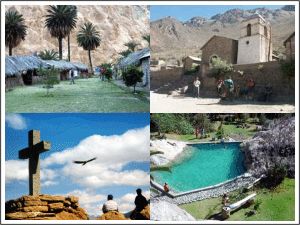 Conoce el Cañón del Colca disfrutando de la naturaleza y su original geografía en caminatas por los pueblos de este impresionante Valle
Duracion: 03 Day / 02 Nights
Frecuencia de Visita:

Deportes de Aventura
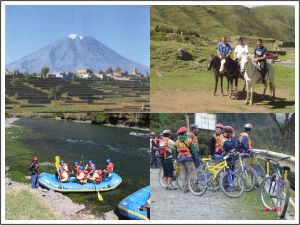 Canotaje - Bicicleta de Montaña - Paseos a Caballo - Ascenso a Volcanes Misti y Chachani
Duración: 6 horas
Frecuencia de Visita:
Ca��n del Colca
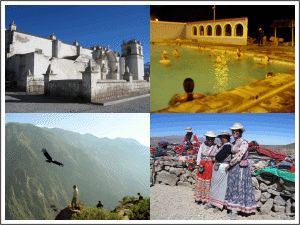 Visita el segundo Cañón mas Profundo del Mundo y admire el vuelo de los cóndores
Duración: 2 Dias / 01 Noche
Frecuencia de Visita:
Tour Monasterio de Santa Catalina
 Visite el mas espectacular monumento religioso del Perú
Duración: 02 horas
Frecuencia de Visita:
City Tour
 Recorrido del centro Historico y campiña de la ciudad de Arequipa
Duración: 04 horas
Frecuencia de Visita:
Tarifas
TARIFAS
| Habitación Simple |
Soles S/. 144.00
|
| Habitación Doble |
Soles S/. 176.00
|
| Habitación Triple |
Soles S/. 208.00
|
|
Incluye Desayuno Americano, impuestos (I.G.V) |
|
Servicios
- Confortables habitaciones y Bungalows
- TV Cable y Minibar
- Salón con Chimenea.
- Comedor y Servicio de Cafetería
- Piscina
- Terraza con Mirador
- Playa de Estacionamiento Privada
- WIFI
Otros Servicios:
-
Lavandería, Lecciones de Español, Conexión a Internet, Mini Gimnasio y servicio de Fax.
Ubicacion
 Construido en medio de hermosos jardines, el Hostal Queen's Villa esta ubicado en la Calle Luna Pizarro # 512, Vallecito,a pocas cuadras de la Plaza de Armas y el Centro Histórico de Arequipa.
Nosotros
Queen's Villa Hotel Arequipa - Misión
Acogemos a nuestros huéspedes combinando las condiciones natural de nuestro entorno con un servicio de esmerada atención”.
Queen's Hotel de Arequipa - Visión
Hacemos que su estadía sea la más grata experiencia de relax y de satisfacción total en una atmósfera rodeada de naturaleza.
Hotel Queen's Villa de Arequipa - Filosofía
Brindar una atención exclusiva y personalizada. Contamos con un equipo de profesionales en turismo y hotelería que le brindran información, asesoramiento y ayuda profesional.
Hotel Queen's Villa de Arequipa - Infraestructura
En un amplio solar rodeado de abundante vegetación, nuestro Hotel se construyo en los años 90 y reformado recientemente cuenta con una zona moderna y otra colonial decorada exquisitamente con detalles de la época. Nuestras habitaciones estan completamente equipadas; todas con vista a nuestros amplios jardines, logrando asi un ambiente libre, acogedor y de calidez humana.
Queen's Villa Hotel posee sus propias "zonas verdes" ademas de estar en un vecindario muy tranquilo y a solo 6 cuadras de la Plaza de armas; Uds. encontrará un oasis de verdor en pleno Centro Histórico de Arequipa. Nuestro Hotel propicia la paz y vela por el descanso, comodidad y tranquilidad de sus huespedes.
Venga y descubrirá el encanto de nuestro Hotel, contamos también con un acogedor salón con chimenea, un comedor y servicio de cafetería, una terraza mirador donde podrá deleitarse con una amplia vista de nuestra ciudad y sus volcanes.
En la ciudad de Arequipa tenemos cielo despejado casi todo el Año con un radiante sol, y para una estancia realmente relajante nuestro Hotel cuenta con una piscina y zonas verdes para el relax del huesped.
TEMPLO DE SANTIAGO DE COPORAQUE
Singular ejemplo de arquitectura religiosa peruana. Aquí predicó Luis Jerónimo de Oré primer obispo nacido en el Perú a fines del siglo XVI.
SANTO DOMINGO
Si bien los dominicos ya estan presentes en la fundacion de la ciudad , el actual templo data de 1677 o 1680, sobresaliendo su portada lateral , lado del Evangelio...
CASA TRISTAN DEL POZO
Esta casona tambien llamda Ugarteche o Ricketts, esta ubicada en la calle San francisco. Se distingue por su imponente planta y hermosa fachada, siendo considerada otro modelo de la arquitectura arequipeña...
Bienvenidos
Bienvenidos al Queen's Villa, Hotel Arequipa con el confort y la calidad que usted espera, en la zona m�s tranquila de la Ciudad.
Nuestra Gerente General Marianela Zegarra Becerra les da la bienvenida a Arequipa e invita a sus huepedes a disfrutar de una estancia impecable... Aunque aun tenemos la categoria de Hostal, "nuestra atencion de primera asemeja la calidad de un Hotel 5 estrellas."
Nuestro Hospedaje es miembro de AHORA, la Asociacion de Hoteles y Restaurantes de Arequipa, una asociacion que busca la constante Capacitacion a todo nivel en gestion y servicios turisticos, promociona ademas politicas de calidad total en atencion al cliente.
Tambien pertenecemos al AVIT (Agencias de Viajes y Turismo) cuyos fines principales son promover y estimular las actividades propias del Turismo de la Region Arequipa, buscando la formalidad y calidad en los servicios turisticos que se prestan en la region.
Somos una empresa formal en el rubro de hospedaje y debidamente registrados, Nuestro Hotel es reconocido ademas por la camara de Comercio de Arequipa y el Ministerio de Turismo del Peru.
Todo el personal del hotel Queens Villa Arequipa esta a su entera disposicion para asesorarle y ayudarle en todas sus necesidades.
Por todo ello y mas, denos la satisfaccion de servirle... le aseguramos que su visita a Arequipa sera inolvidable.
Promociones
Increibles precios
en Tarifa Corporativa!!!!
TEMPLE OF SANTIAGO Coporaque
Singular example of religious architecture in Peru. Luis Jerónimo preached here from Bishop Ore. This Franciscan priest was an early and polyglot scholar who wrote valuable manuals catechism in native languages.
About us
Queen's Villa Arequipa Hotel - Mission
We host our guest combining the natural conditions of our environment with a careful attencion.
Queens Villa Arequipa Hotel - Vision
We make your stay in our Hotel be the most relaxing experience and the whole satisfacción in a environment surrounded by nature.
Queens Villa Arequipa Hotel - Philosophy
Our Hotel 's focus is to take care of you personally, with a dedicated staff that will assist you in your every need.
Queens Villa Arequipa Hotel Infraestructure
In a large site surronded by trees and plants; our Hotel was built in the 90's and was recently restored. It has a Modern and Colonial zone with exquisite decoration from the period. We have rooms and bungalows in our big gardens, getting in that way a free, warm and human atmosphere.
Queen's Villa Hotel Arequipa has its own "green areas" besides being located in a very quiet neighborhood. Our Hotel gives the peace and always looks for the comfortability of its guests.
Come to discover the charm of our hotel. We also have a spacious sitting room in main building, Fireplace, dinning area and room service, terrace with panoramic view of the city and its volcanos.
In Arequipa city we can almost always see a perfect blue sky and for a pleasant staying we also count on a swimming-pool and green areas to make the guests relax.

Welcome
Welcome to Queens Villa Arequipa Hotel with the comfort and quality you are looking for, in the most peaceful zone in Arequipa.
Our manager Marianela Zegarra Becerra welcomes you to Arequipa and invite you all guests to enjoy a great stay... although we are still considered as a Hostel, "our finest attention is similar to the quality of a 5 star - Hotel"
Our accommodation is a member of AHORA, Hotels and Restaurants Association in Arequipa, a group which looks for permanent training in terms of managing and tourist services, promoting the best quality in helping the client.
We also belong to AVIT (Travel and Tourism Agent's) which main purpose is to encourage and stimulate the activities of tourism in Arequipa, searching for formality and quality of tourist services in our town.
It is a formal enterprise in accommodation and it is also formally registered, re-known by the Commerce Chamber and the Ministry of Tourism.
All the staff in Queens Villa Hotel Arequipa is ready to help and assist you in your necessities.
For these reasons and others, give us the satisfaction of serving you... we are sure your visit to Arequipa will be unforgettable.
Colca Canyon Trekking
Know this canyon enjoying the nature and it's original geography in long walk and towns of the impressive Colca Valley.
Duration: 03 Day / 02 Nights
User Rating:
Adventure Sports
Rafting - Mountain Biking - Horse Riding - Misti or Chachani volcano climbing.-
Duration:
User Rating:
Colca Canyon Tour
Visit the second deep Canyon in the world and admires the Condor's flight
Duration: 02 Days / 01 Night
User Rating:
Santa Catalina Monastery Tour
Visit the most important and spectacular religious monument of Peru.
Duration: 02 hours.
User Rating:
City Tour
Route of the Arequipa's Historical center and country side
Duration: 04 Hours
User Rating:
Rates
| Single Room |
U.S.$ 48.00
|
| Double Room |
U.S.$ 58.00
|
| Triple Room |
U.S.$ 69.00
|
| Includes American Breakfast , Taxes (I.G.V) and 10% services | |
Services
- Comfortable rooms and separate bungalows
- Cable TV and Minibar
- American breakfast included
- Spacious sitting room in main building. small library, fireplace.
- WI FI
- Dinning area
- Room Service
- Swimming pool
- Private parking
- Terrace with Panoramic View of the City
Additional Services:
-
Work-out center - Laundry - Spanish Lessons - FAX Service
Location
The Queen's Villa is located in the quiet neighborhood of "Vallecito" (Buy--yay--cee--to), just a few minutes from historical downtown Arequipa. The street address is Luna Pizarro 512.
Bigger map of Down Town Arequipa
Promotions
Low prices
for Business People !!!!
house TRISTAN OF the WELL
This large house also llamda Ugarteche or Ricketts, this located in the San Francisco street. One distinguishes by his imposing plant and beautiful facade, being considered another model of the architecture arequipeña.
The countryside
This obligatory route can be inciar, that as much they enjoy the arequipeños and is reason for local pride, from the traditional Spa of Jesus, to 9 kilometres of Arequipa and the foot of spurs of the Pichi Pichu....
